These Days Bureau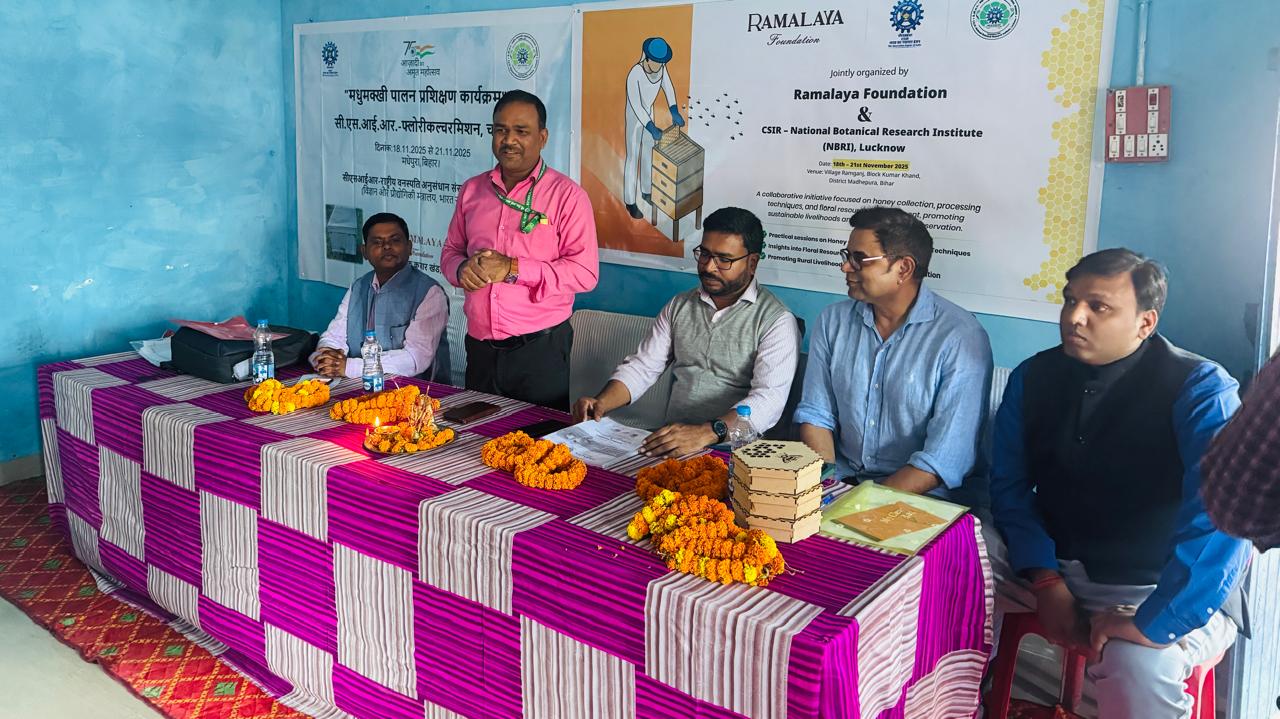
CSIR–NBRI and Ramalaya Foundation jointly launch Bihar’s first scientific honey production and biodiversity restoration initiative in Ramganj, aiming to boost farmer incomes and strengthen ecological sustainability across the region.
Madhepura, Bihar | 18 November 2025
In a significant stride toward sustainable rural development, Bihar has inaugurated its first Scientific Honey Production and Biodiversity Restoration Project in Ramganj village, Madhepura. The initiative, launched under the CSIR Floriculture Mission – Phase II, is spearheaded by Mission Director Dr. Ajit Kumar Shasany and implemented by the CSIR–National Botanical Research Institute (NBRI), Lucknow, in collaboration with the Ramalaya Foundation, founded by Shri Prashant Kumar.
The launch event witnessed active participation from the District Administration, Block Development Office, Forest Department, and experts from the Krishi Vigyan Kendra (KVK). Additional technical expertise was contributed by Mr. Manoj Kumar, Block Project Manager, Jeevika (Kumarkhand), and Mr. Nimit Singh, Founder of Madhumakhi Wala Industry, Lucknow. Together, the stakeholders emphasized a unified approach toward strengthening rural livelihoods through scientific innovation and ecological restoration.
District Magistrate Shri Taranjot Singh, IAS, praised the project as a transformative model for environmental conservation and rural upliftment. He assured complete administrative support and expressed plans to visit the site personally to interact with scientists and farmers, underscoring the government’s dedication to sustainable agricultural growth.
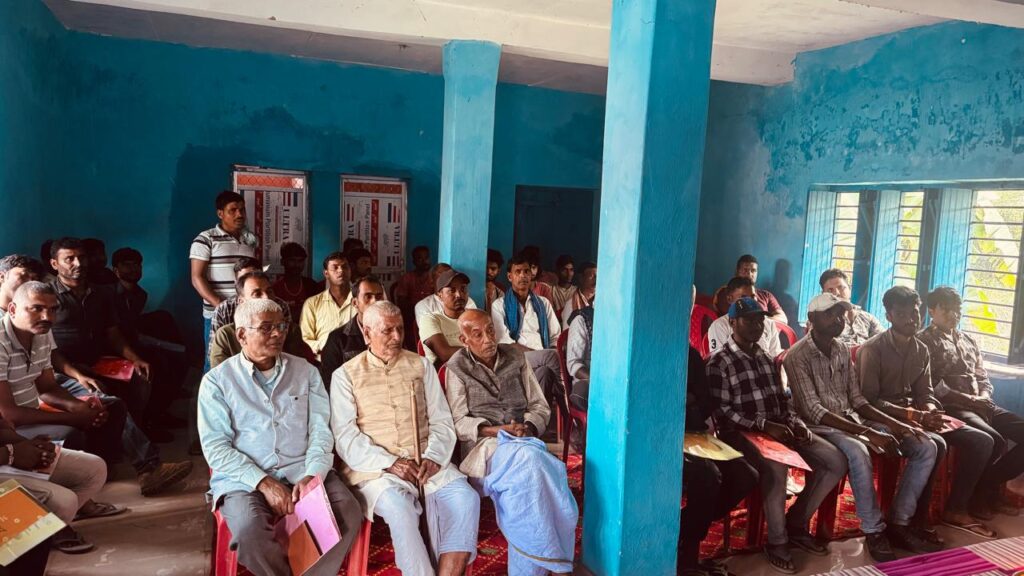
Ramalaya Foundation’s Founder, Shri Prashant Kumar, highlighted that the project aims to establish a self-sustaining ecosystem that enhances biodiversity while improving farmer incomes. By merging scientific beekeeping with ecological restoration, he noted, the initiative seeks to empower local communities and promote environmental stewardship. He extended gratitude to CSIR–NBRI for their technical partnership and guidance.
The scientific supervision and training will be led by CSIR–NBRI experts Dr. Sushil Kumar and Dr. Bikarma Singh, Principal Scientists, along with Project Associate Prabhat Maurya.
According to Dr. Sushil Kumar, Ramganj offers tremendous ecological potential for scientific honey production. Modern beekeeping practices, he stated, will help increase farmer income while protecting regional biodiversity.
Dr. Bikarma Singh emphasized that scientific beekeeping not only enhances honey output but also revitalizes the natural ecosystem. Their goal is to train farmers extensively in updated beekeeping and ecological restoration techniques to ensure long-term project success.
The project plans to develop a 2 km biodiversity zone, install 200 scientifically managed bee boxes, and support an estimated 30–50% increase in farmer income. Over the next three years, more than 200 new farmers are expected to join the initiative. The project will also expand to other blocks of Madhepura and increase plantation activities across 20–30 hectares, contributing to a stronger ecological framework and sustainable rural livelihoods.