These Days Bureau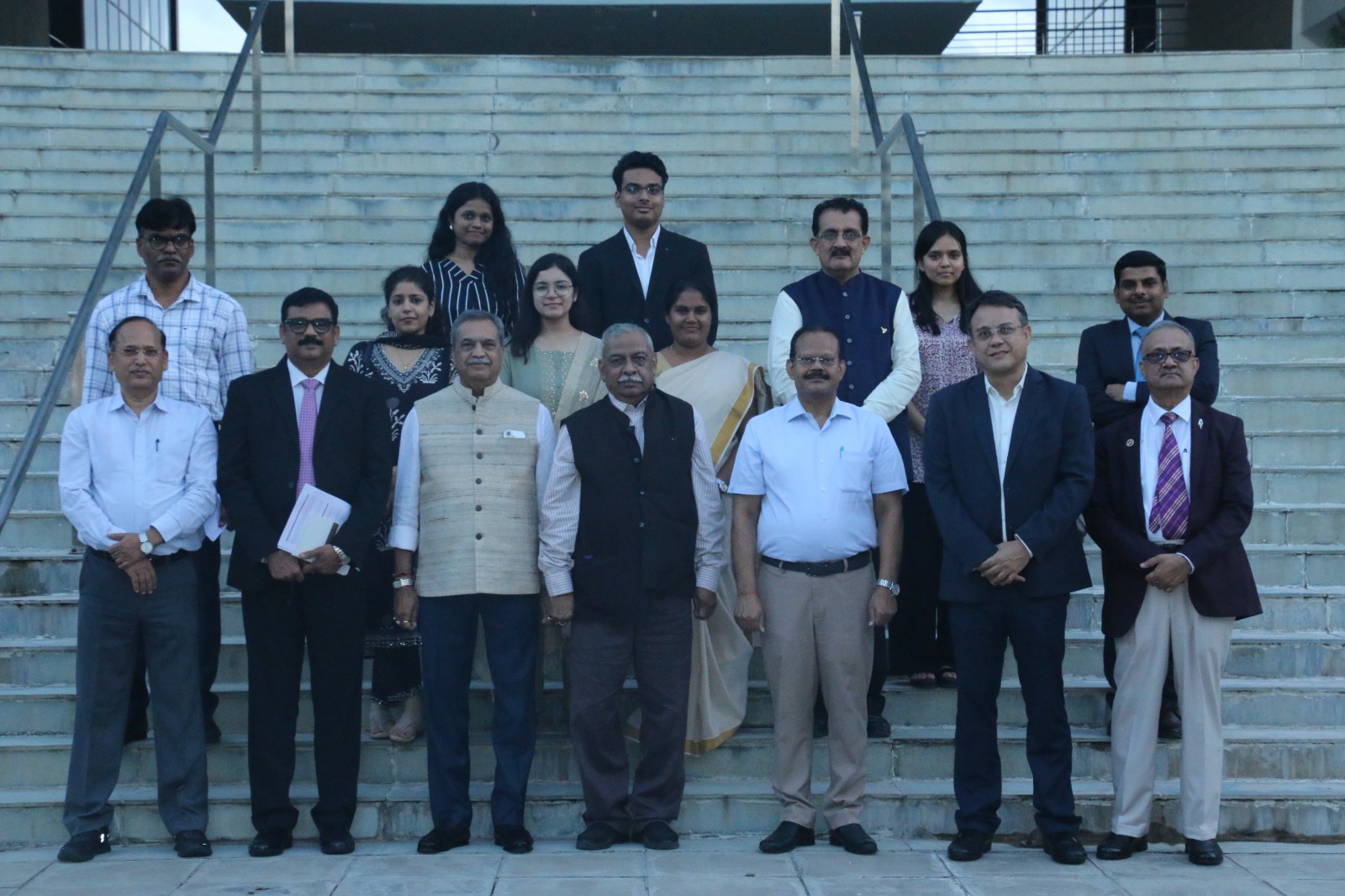
GNLU’s consultations in Gandhinagar and Bengaluru bring experts and industry leaders together, underscoring the urgent need for clear regulation, enhanced safeguards, and innovation-driven policy reform in India’s crypto ecosystem.
Gandhinagar, 5 December 2025
The Gujarat National Law University (GNLU) has advanced its efforts toward building a coherent national regulatory framework for crypto assets by organizing two key consultations—a high-level Advisory Board Consultation in Gandhinagar and a Regional Stakeholder Consultation in Bengaluru. These discussions form part of GNLU’s national research initiative, “Assessing the Case for Regulation of Crypto Assets in India.”
Led by Prof. (Dr.) S. Shanthakumar, Director of GNLU, the research project draws interdisciplinary expertise from the fields of law, commerce, technology, and cybersecurity. Its objective is to evaluate India’s current legal and regulatory mechanisms surrounding virtual digital assets (VDAs) and develop evidence-backed policy recommendations for future regulation.
During the Advisory Board Consultation, experts conducted an in-depth assessment of regulatory gaps in the Indian crypto landscape. Deliberations focused on enhancing investor protection, promoting fair and transparent markets, reinforcing enforcement frameworks, and maintaining systemic stability while supporting technological innovation.
The Advisory Board includes distinguished jurists, senior administrative officials, cybersecurity professionals, academicians, and industry pioneers. Among the notable participants were Hon’ble Justice M. R. Shah (Former Judge, Supreme Court), Hon’ble Justice Ravi Tripathi (Former Judge, Gujarat High Court), Sh. Rajkumar (Former Chief Secretary, Government of Gujarat), Sh. J. P. Gupta (Former Additional Chief Secretary), Dr. Keshav Kumar (Former DGP & Director, Anti-Corruption Bureau), along with leading technology entrepreneurs and cyber law experts.
Key themes emerging from the discussions emphasized the importance of clearly defined legislative provisions for crypto assets, smoother coordination among regulators, simplified and transparent taxation norms, stronger consumer protection mechanisms, and effective systems for dispute resolution and cross-border regulatory compliance.
To capture industry perspectives, GNLU expanded the dialogue to Bengaluru—one of India’s most dynamic hubs for crypto and blockchain innovation. The Regional Stakeholder Consultation brought together market participants, exchange representatives, technology innovators, and service providers who shared real-world challenges and proposed reforms to enable responsible and sustainable innovation.
The combined insights from the two consultations offer a comprehensive understanding of India’s crypto ecosystem—blending policy expertise with practical industry experience. According to GNLU officials, the feedback received will significantly shape the final recommendations of the ongoing research project.
Prof. (Dr.) Shanthakumar reiterated GNLU’s commitment to supporting India’s transition toward informed and future-ready regulation. “Our goal is to contribute to a regulatory architecture that promotes innovation while ensuring adequate safeguards and institutional consistency,” he stated.
As consultations continue across the country, GNLU’s project aims to help India move toward a structured, transparent, and forward-looking regulatory framework for crypto assets.