These Days Bureau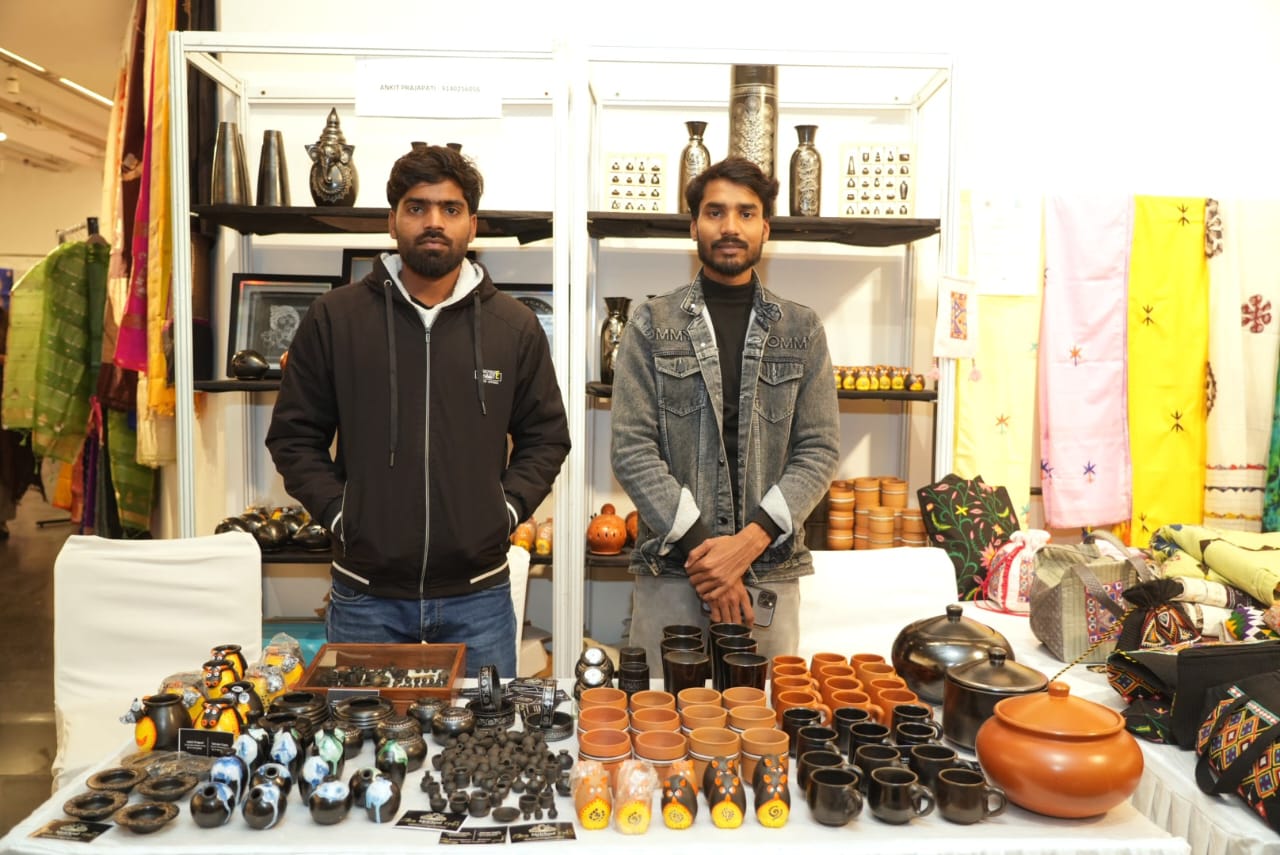
Ancient Oxygen-Reduction Technique Highlights India’s Living Cultural Heritage
New Delhi: The true bearers of India’s world-famous Black Pottery tradition, protected under the GI tag, are showcasing their craft in New Delhi at ITRHD’s 12th Craft Festival. Artists from Nizamabad, Azamgarh district of Uttar Pradesh, are presenting both heritage creations and contemporary designs to bridge the gap between ancient art and modern audiences.
The foundation of this unique Black Pottery tradition was laid by the late Rajendra Prasad Prajapati, who gave it national and international recognition. His son, Shivratan Prajapati, carried this legacy forward, and today the third generation, represented by Ankit Prajapati, is preserving the art while also giving it new dimensions. At the 12th Craft Festival in Delhi, Ankit Prajapati is presenting his family’s craft tradition through a contemporary artistic expression.
Along with traditional Black Pottery utensils, several rare and distinctive artworks are on display at the festival. These include permanent sketches made with an iron pen on clay plates, idols of Ramlalla, and artworks based on major pilgrimage sites such as the Ram Temple and Kashi Vishwanath, which cannot be erased once created. In addition, Black Pottery–based jewellery for women, clock stands, decorative pieces, and utility products are also drawing special attention from visitors.
Speaking on the occasion, Ankit Prajapati said emotionally,
“Black Pottery is not just an art form for me; it is my identity, my family, and the spiritual practice of generations. Presenting to the world the same soil in which my grandfather and father devoted their entire lives is a matter of great pride for me. What is painful is that today many people are claiming to be the saviours and custodians of Black Pottery, whereas the truth is that this art has survived only because of those families who have practiced it for generations. Hiding the real legacy and making false claims is an injustice to this art.”
He further added that his objective is not confrontation, but to bring the truth to the forefront, so that future generations know from whose hands Black Pottery was born and through what struggles it has survived to this day.
This presentation is not limited to an exhibition of craft alone; it also highlights the traditional technique of Black Pottery, in which a natural black colour is achieved through a controlled oxygen process without the use of any chemicals or paint. This technique ensures its shine, strength, and long-lasting identity, granting it the status of a unique cultural heritage of India.
The 12th Craft Festival being held in Delhi is providing a national platform to the true legacy of Black Pottery. At the same time, it conveys a clear message that when traditional Indian arts receive the right recognition, respect, and opportunities, they can establish a strong presence on the global stage. The artists from Nizamabad (Azamgarh) remain committed to preserving Black Pottery and carrying it from India to the world.