These Days Bureau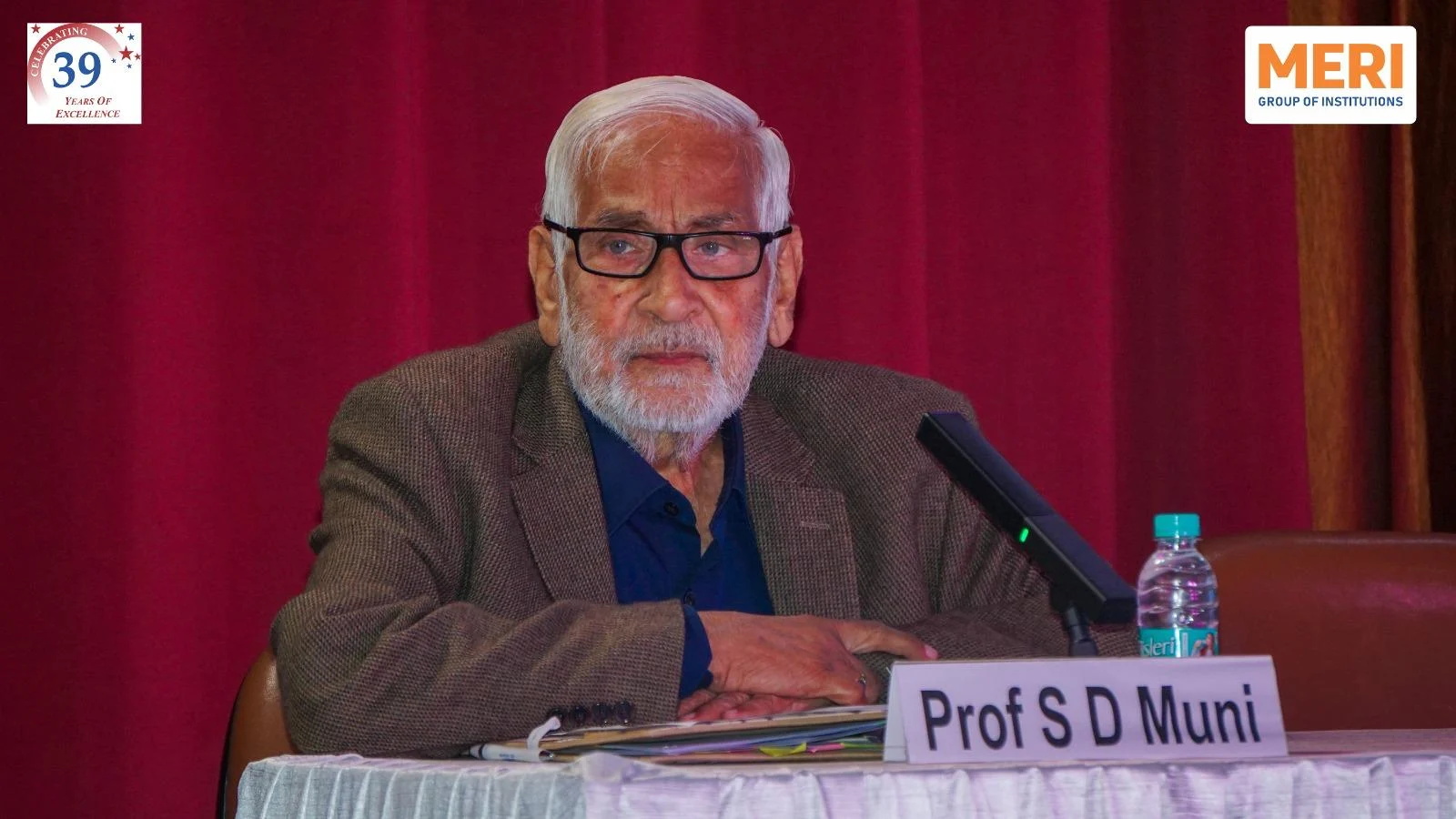
Special Emphasis on India’s Upcoming BRICS Presidency and Advancing the Collective Voice of the Global South
New Delhi: With a focus on “BRICS: Challenges and Opportunities,” MERI Dialogue 6.0 gathered distinguished global stakeholders in New Delhi for meaningful deliberations on emerging geopolitical and economic realities.
Welcoming the eminent guests, faculty members, scholars, and students, Prof. Lalit Aggarwal, Vice Chairman of the MERI Group of Institutions, reflected on the journey of MERI Dialogue from its inception to its sixth edition. He underscored the importance of connecting young minds with seasoned experts in international relations to foster informed global leadership.
Prof. (Dr.) Ramakant Dwivedi, Head of the MERI Centre for International Studies and Director of the India Central Asia Foundation, outlined the objectives of the conference. Delivering the inaugural address, Ambassador Ashok Kumar Sharma—former Ambassador of India to Kazakhstan and Finland—highlighted BRICS’ strategic role in global governance, economic integration, technological collaboration, South-South cooperation, and the prospects of a common BRICS currency. He also addressed institutional constraints, geopolitical tensions, and implementation challenges facing the grouping.
The Guest of Honour, Mikhail Ponster from Russia, extended his best wishes for the conference. Shri I. P. Aggarwal, Hon’ble President of the Triveni Educational and Social Welfare Society and Chairman of the MERI Group of Institutions, emphasized India’s forthcoming presidency of BRICS in 2026. He spoke about India’s pivotal role in strengthening cooperation among member nations and amplifying the collective voice of the Global South.
On the occasion, the book India and Europe: Challenges and Opportunities was formally released. Presenting the volume, Dr. S. S. Mishra noted that the book explores the historical, civilizational, and cultural linkages between India and Europe while analyzing emerging dynamics in the relationship, including developments such as the proposed EU-India Free Trade Agreement.
The first technical session, chaired by Prof. S. D. Muni, Professor Emeritus at Jawaharlal Nehru University, focused on strengthening cooperation between BRICS and the Global South. He stressed the need to move beyond rhetoric toward tangible outcomes, prioritizing human development and inclusive partnerships. Speakers including Dr. Vadim B. Kozyulin (Russia), Prof. Srikanth Kondapalli (JNU), Dr. Yonas Adeye Adeto (Ethiopia), Prof. Abdusamat A. Khaydarov (Uzbekistan), Dr. Rachel Rudolph (China), and Prof. Ajay Dubey (JNU) addressed critical themes such as security, cyber threats, climate change, energy, agriculture, disaster management, digital infrastructure, governance, and Africa’s expanding role within the Global South.
The second technical session, chaired by Lt. Gen. P. J. S. Pannu (Retd.), centered on “BRICS: Technology and Innovation.” Discussions examined the global space economy, India’s evolving satcom sector, the semiconductor industry, and emerging technological ecosystems. Particular emphasis was placed on advancing from semiconductor design to manufacturing, strengthening digital resilience, enhancing cybersecurity, and aligning policy frameworks for sustainable technological growth.
The third session, chaired by Prof. V. K. Jain, explored BRICS’ contributions to supply chains, sustainability, and economic partnerships within the Global South. Deliberations highlighted the promotion of renewable energy, green infrastructure financing through the New Development Bank, responsible leadership, and holistic sustainability. Speakers also discussed the transformative role of artificial intelligence as the “nervous system” of supply chains, its strategic industrial applications, and the effective deployment of technology to drive concrete development outcomes across the Global South.
The conference concluded with a formal vote of thanks delivered by Dean Prof. Deepshikha Kalra, who expressed appreciation to the international delegates, session chairs, speakers, and organizing team for their valuable contributions to the success of MERI Dialogue 6.0.