These Days Bureau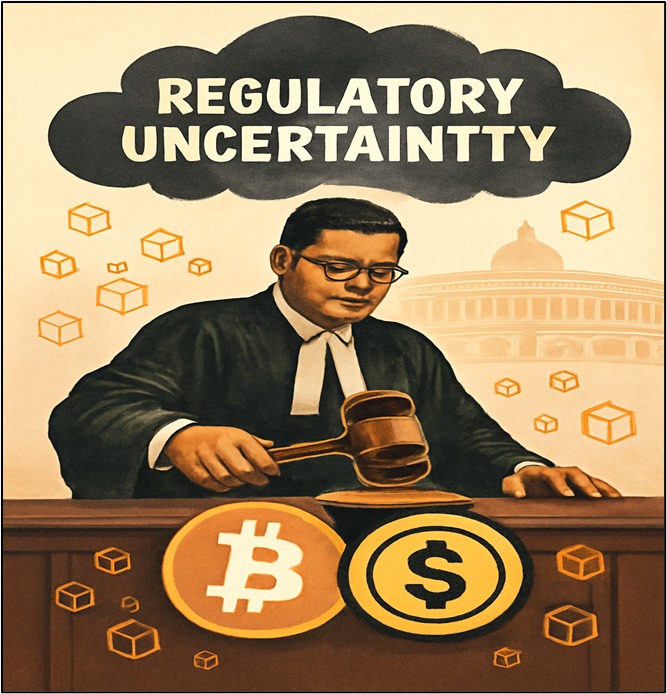
Judiciary warns government that ad-hoc fixes and taxation without oversight are unsustainable
New Delhi, 18 August 2025
Indian courts are once again sounding alarms over the absence of a clear regulatory framework for cryptocurrencies, highlighting what they call an unsustainable “legal vacuum” around the booming sector.
From the landmark 2020 Internet and Mobile Association of India v. RBI case to more recent bail hearings and money laundering trials, judges have repeatedly flagged that crypto in India operates in a grey zone — taxed at 30% but governed by no dedicated law.
In its original 2020 ruling, the Supreme Court struck down the RBI’s blanket banking ban on crypto trading, calling it disproportionate. Yet, the Court also underlined that crypto does pose real risks and pressed for legislative clarity, stressing that absence of regulation is not a license for unchecked growth.
Since then, the judiciary’s concerns have only deepened. In a 2023 Odisha bail matter, the Bench openly observed that cases involving crypto assets are multiplying, leaving law enforcement and courts struggling to keep pace. The judges went so far as to note that “trading in crypto assets is legal” but questioned how long such a fast-growing ecosystem could remain unregulated.
Recent hearings in money laundering and tax evasion cases have sharpened this tone. Courts have directly asked investigative agencies to explain their ability to trace wallets and follow digital transactions, while warning that a “parallel economy” could emerge if lawmakers fail to act.
The Supreme Court has now criticized the government’s contradictory stance: taxing digital assets at high rates while refusing to provide a supervisory framework. The message is blunt — judicial patchwork cannot replace legislative clarity.
As one judge remarked, crypto today intersects not just with technology but with criminal law, taxation, consumer rights, and international finance. Relying on outdated laws designed for a pre-digital age places both citizens and institutions at risk.
The undertone is unmistakable: courts are not making policy, but they are demanding one. Unless lawmakers step in, India risks deeper confusion, heavier enforcement burdens, and a much costlier clean-up later.