admin
admin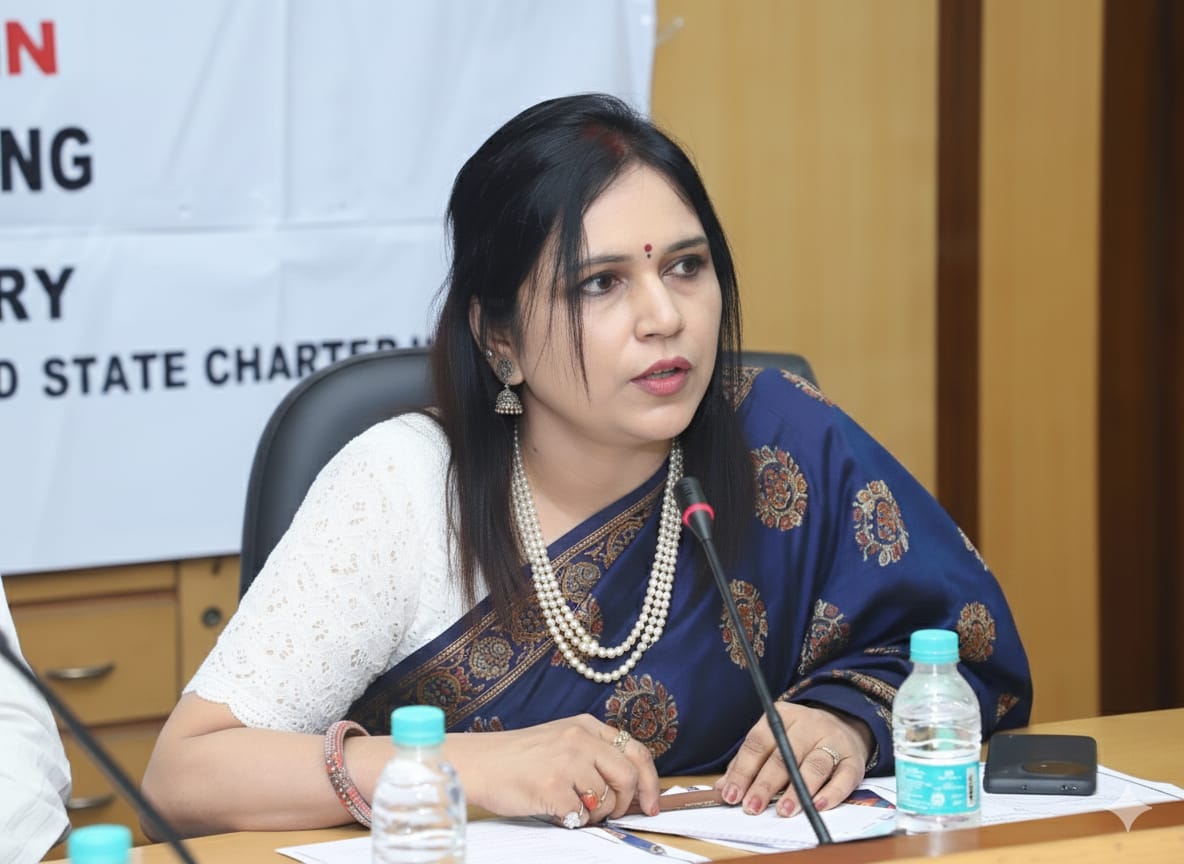
Why Farmer Livelihoods and Food Security Must Guide Maize Policy Decisions
New Delhi: Maize has re-emerged as a central topic in India’s policy debate, with trade negotiations, ethanol policy, seed reforms, and farmer livelihood concerns highlighting its growing strategic importance. Beyond being an agricultural commodity, maize now shapes decisions on economic policy and food security. Taken together, these developments suggest mounting pressure to revisit India’s non-GM maize position, even though no official policy change has been announced. The predominance of GM maize in U.S. production adds further significance to these discussions.
India faces more than a technical question; it faces a moral, economic, and strategically national one. The government must address food security, protect farmer dignity, sustain rural livelihoods, and uphold India’s sovereign right to choose its agricultural path. Negotiators at international tables often treat maize as a commodity, but in Indian villages, farmers depend on maize for their livelihoods. Policymakers must always place this distinction at the centre of decision-making. Recent discussions on ethanol blending have intensified the maize debate. India has successfully achieved higher ethanol blending targets, marking a significant milestone in energy planning. As policymakers increasingly consider maize as a feedstock for ethanol, some voices suggest supplementing it with imports. Authorities must approach these discussions with caution. Ethanol policy should strengthen domestic agriculture rather than inadvertently weaken it.

India maintains regulatory safeguards on genetically modified crops, including maize. The government restricts GM maize imports and requires rigorous regulatory approvals. These measures prioritize biosafety and public interest while encouraging domestic production. At the same time, farmers continue to face challenging ground realities. In parts of Karnataka, including Belagavi district, adverse weather destroyed crops, reduced quality, and forced distress sales. Procurement delays and weak market support compounded the challenges, even without imported maize. These events underscore the need for stronger procurement systems, price assurance, and timely intervention mechanisms.
If cheaper imported maize enters the market, price pressure will intensify. Procurement agencies may slow their operations, private buyers may negotiate aggressively, and farmers growing non-GM maize may face greater uncertainty. Policymakers must carefully evaluate these risks before recalibrating policy. The Government of India has consistently emphasized its potential to increase maize production through non-GM methods. Advances in conventional breeding, climate-resilient crops, improved agronomic practices, efficient irrigation, and mechanization have already delivered results. By investing in public research institutions, extension services, and seed quality systems, India can meet rising demand without compromising its non-GM position.
India produces strong, adaptable, and climate-resilient non-GM maize across diverse agro-climatic zones. Indian agricultural experience shows that genetic modification is not the only path to productivity. Strengthening domestic capacity through Indian scientists, seed companies, and farmers builds resilience and reduces long-term dependence. Regulators must also provide clear guidance. While India’s GM crop framework has faced criticism for slow decision-making and limited transparency, this caution safeguards against irreversible decisions made without public consultation. Authorities must implement transparent, science-based regulations to maintain public trust. The Draft Seeds Bill 2025 aims to modernize seed regulation by improving quality control, registration, and accountability. Farmers, long affected by spurious seeds, will benefit from its effective implementation. For non-GM maize, the Bill can improve traceability, strengthen seed reliability, and encourage innovation. Policymakers must protect farmer seed rights and domestic breeding efforts in both letter and spirit.
India must plan ethanol expansion carefully. Domestic maize, damaged grains, agricultural residues, and second-generation ethanol technologies provide alternatives to imports. Policymakers must ensure that short-term efficiency does not compromise long-term food and farmer security. India must pursue energy security alongside food security, not at its expense. Choosing non-GM maize remains a strategic, not emotional, decision. Non-GM maize protects farmer autonomy, preserves biodiversity, and reduces the risk of irreversible genetic contamination. It allows India to build premium domestic and export markets that value non-GM status. Most importantly, it safeguards national sovereignty over seeds and food systems. Global demand for non-GM maize remains strong. By protecting this identity today, India can position itself as a reliable and responsible supplier—an advantage that will be difficult to regain if lost.
By Dr. Mamtamayi Priyadarshini
Environmentalist, Social Worker, and Author of Maize Mandate

 These Days Bureau