admin
admin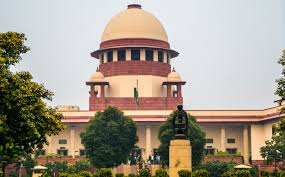
Partial relief for petitioners as court balances minority rights with legislative reform in landmark interim order
New Delhi, September 15, 2025
In a landmark interim ruling, the Supreme Court of India on Monday struck down two contentious provisions of the Waqf (Amendment) Act, 2025, while refusing to suspend the law in its entirety. The bench, led by Chief Justice B.R. Gavai and Justice Augustine George Masih, stressed that statutes enjoy a presumption of constitutionality and can be stayed in full only in the “rarest of rare” cases.
The Act, which amends the Waqf Act of 1995, has faced over 100 legal challenges for allegedly undermining minority rights. Passed by Parliament in April with narrow margins in both Houses, the law aims to curb encroachments and streamline waqf property management. Critics, however, claim it increases government control and restricts Muslim community autonomy.
While affirming Parliament’s authority to legislate, the court temporarily stayed:
- The five-year practice of Islam requirement for individuals creating a waqf, citing risks of arbitrary enforcement.
- The cap on non-Muslim representation (maximum three members) in state waqf boards and the Central Waqf Council, calling it restrictive to institutional autonomy.
The bench also halted provisions allowing government officers to delay recognition of waqf properties until encroachments were assessed, warning against executive overreach. However, it upheld the abolition of “waqf by user” and emphasized the importance of mandatory registration to reduce disputes.
The ruling has drawn sharp political reactions. Union Minister for Minority Affairs Kiren Rijiju welcomed it as validation of parliamentary will, while opposition leaders including Congress’s Jairam Ramesh and AIMPLB’s Syed Qasim Rasool Ilyas hailed the partial stay as a safeguard for minority rights.
With nearly 9 lakh waqf properties across India valued in billions, the court’s interim order sets the stage for a high-stakes constitutional battle in the months ahead.

 These Days Bureau