admin
admin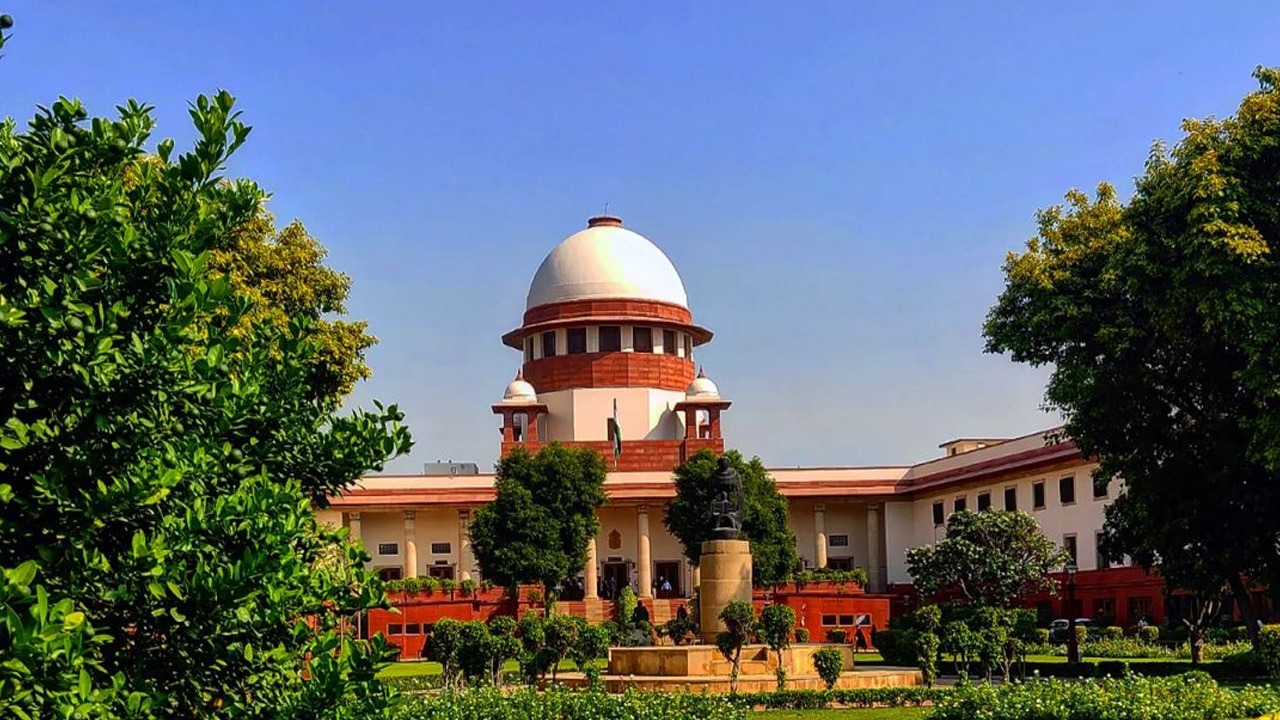
Clear regulatory framework offers relief to projects stalled over transmission line restrictions
New Delhi: NSEFI has expressed its appreciation for the Supreme Court’s evidence-based verdict, which protects endangered bird species without undermining India’s renewable energy growth and climate commitments.
NSEFI has always supported an evidence-based and balanced approach since its first response petition to the GIB case in the National Green Tribunal in 2019, followed by an impleading in the Supreme Court in 2020.
NSEFI strongly believes that measures that simultaneously protect critical wildlife habitats through targeted conservation measures, along with clear regulatory certainty to renewable energy developers, are essential to realising India’s climate goals
NSEFI expresses sincere appreciation to the Hon’ble Supreme Court of India, the Ministry of Environment, Forest and Climate Change, Ministry of New and Renewable Energy (for its constant support over the last 4 years to the renewable energy sector), Ministry of Power, Central Electricity Authority, Central Transmission Utility of India Limited, Wildlife Institute of India, and the State governments of Rajasthan and Gujarat, for their sustained efforts towards protection of the critically endangered species and renewable energy projects in the States of Rajasthan and Gujarat.
The judgement places conservation at the forefront by endorsing a holistic, evidence-based framework that strengthens in-situ and ex-situ measures, rationalises and expands the priority habitats for the GIBs, directs mitigation of critical powerlines in a time-bound manner, and provides for setting up of powerline corridors, all while reinforcing the constitutional and ecological imperative to protect endangered species.
In April 2021, the Supreme Court imposed restrictions on overhead transmission lines in regions classified as GIB habitats. However, in March 2024, the Supreme Court revised its stance, recalling earlier injunctions and expanding the expert panel to a nine-member committee with a dual mandate – to ensure protection of the GIBs while enabling progress on critical renewable energy infrastructure. This new committee submitted a detailed report, revising the GIB “priority area” in the State of Rajasthan to 14,013 square kilometres and in the State of Gujarat to 740 square kilometres. Within the revised priority areas, the Committee has recommended power corridors for the powerlines and has directed for development of a power corridor of up to 5 km width at a distance of 5 km or more to the south of the southern-most enclosure of Desert National Park in the State of Rajasthan and 2 corridors in the State of Gujarat, thereby ensuring that necessary infrastructure is channelled, and managed to reduce collision risk. With respect to usage of bird flight divertors, the judgement calls for a detailed study to ensure that any deployment is guided by demonstrable effectiveness and scientific evidence.
The judgement directs immediate and time-bound mitigation of critical risks to the GIBs and the LFs from the powerlines, including undergrounding or re-routing of identified lines and the focused conversion or insulation of low-tension lines, with the overall mitigation measures to be implemented expeditiously, within 2 years from the judgement. The Supreme Court has prohibited development of any new wind power projects and laying of any overhead transmission lines other than overhead powerlines of a capacity up to 11 kV, except through a dedicated power corridor within the revised priority areas. The Supreme Court has also prohibited: (i) development of new solar parks or solar power plants which exceed 2 MW; and (ii) expansion of existing solar parks within the revised priority areas. For non-priority areas, the Supreme Court has directed optimization of the routes to ensure that the powerlines share maximum common stretches where they converge on common pooling stations.
In view of the final judgement not being pronounced, there have been delays in obtaining approvals under Section 68(1) of the Electricity Act, 2003 for projects up to 14 GW since the last one and a half years. Obtaining approval under Section 68 of the Electricity Act, 2003 is a statutory requirement for construction of overhead transmission lines under the Indian electricity laws. The directions related to undergrounding or re-routing of the powerlines will mean additional costs for the developers and they will have to relook and re-assess the mitigations available to them under the change in law provisions of the power purchase agreements. As the powerlines of 33kV situated within the 80 km (out of the 104 km) area in the State of Rajasthan are required to be undergrounded immediately, developers whose projects are already situated within such area or in case of new projects, are either required to obtain additional permits or execute agreements for obtaining right of way for carrying out such undergrounding which will impact the development and commissioning timelines. The Supreme Court has further observed that a blanket ban on laying of overhead transmission lines, particularly across large desert landscapes, is technically unviable, environmentally counterproductive, and not supported by scientific evidence. The implications of the Supreme Court’s order is significant, as developers have received better regulatory clarity, enabling efficient planning and execution of projects. The verdict helps mitigate uncertainty and provide relief to projects worth INR 65,000 crores.
The Supreme Court has recognised that the GIBs are critically endangered and that their conservation constitutes a constitutional and ecological obligation. At the same time, the Supreme Court has acknowledged that the expansion of renewable energy is indispensable for mitigating climate change, and that excessive reliance on fossil fuels would result in far greater environmental harm.
NSEFI also welcomed the Supreme Court’s acceptance of the mitigation strategy including location-and voltage-specific measures including the establishment of dedicated powerline corridors through revised priority areas. NSEFI is looking forward to extend full support to relevant authorities in achieving these mitigation strategies.


 These Days Bureau