These Days Bureau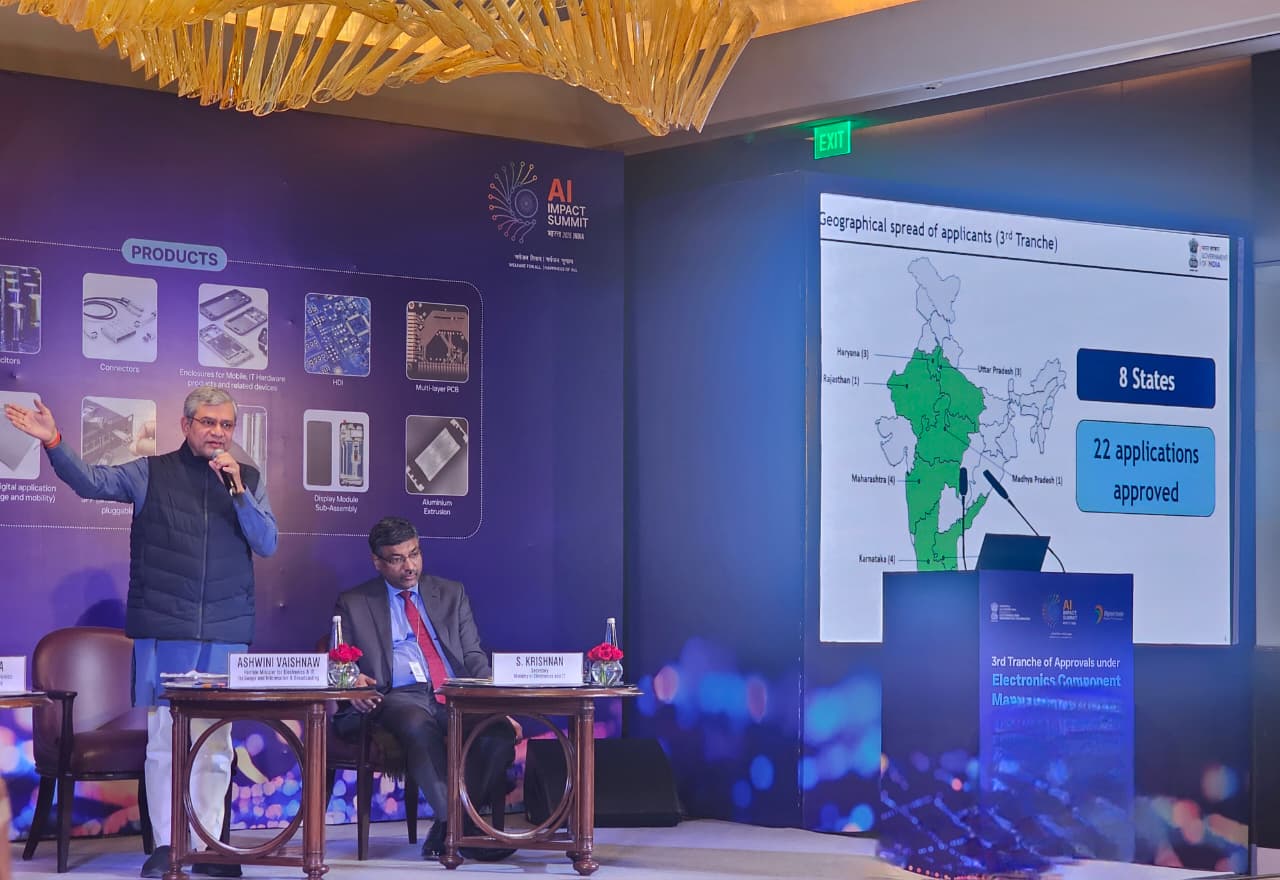
New Delhi, January 02, 2026
The Ministry of Electronics and Information Technology (MeitY) today approved 22 new proposals under the Electronics Components Manufacturing Scheme (ECMS), paving the way for a projected investment of ₹41,863 crore and production worth ₹2,58,152 crore. The approvals, expected to generate 33,791 direct jobs, were handed over by Union Minister for Electronics and IT, Ashwini Vaishnaw, to company representatives at an event in the capital.
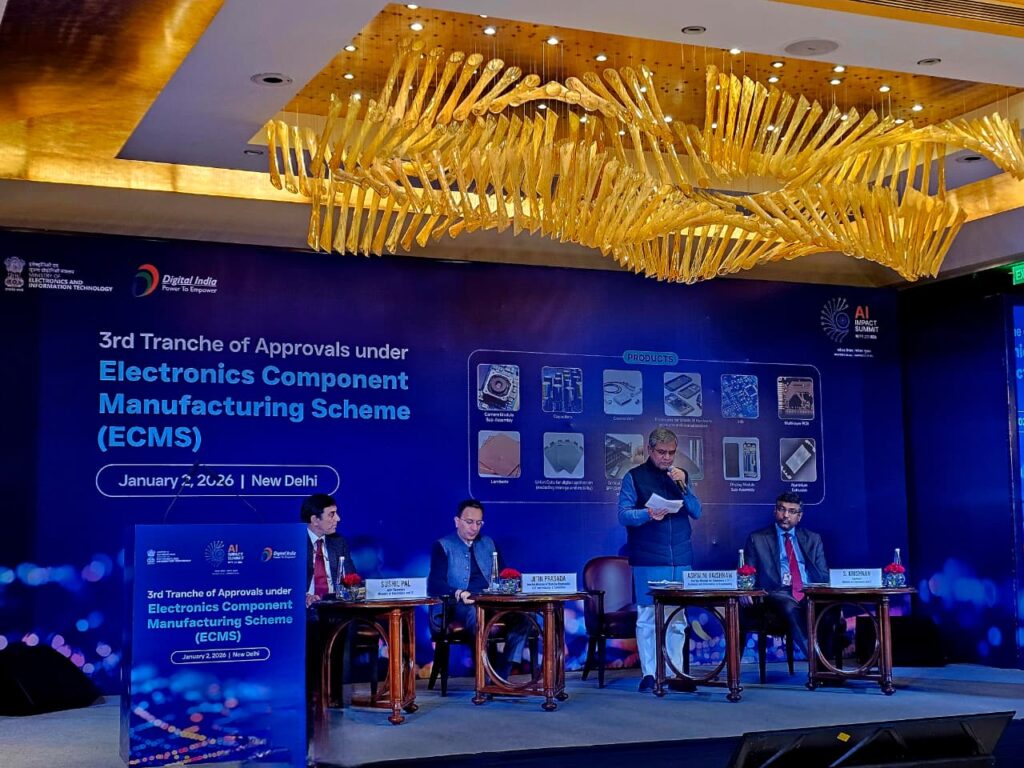
The event was attended by Shri Jitin Prasada, Hon’ble Minister of State for Electronics and Information Technology, and Shri S. Krishnan, Secretary, MeitY.
This marks the third tranche under the scheme, following previous approvals including 24 applications worth ₹12,704 crore in investment.
The approved projects span manufacturing of 11 critical target segments essential for sectors like mobile phones, telecom, consumer electronics, automotive, IT hardware, and strategic electronics. These include:
- Bare components: PCB, Capacitors, Connectors, Enclosures, and Li-ion Cells
- Sub-assemblies: Camera Module, Display Module, and Optical Transceiver
- Supply chain items: Aluminium Extrusion, Anode Material, and Laminate
Spread across eight states — Andhra Pradesh, Haryana, Karnataka, Madhya Pradesh, Maharashtra, Tamil Nadu, Uttar Pradesh, and Rajasthan — the initiatives highlight the government’s push for balanced regional development in electronics manufacturing.
These approvals are poised to bolster domestic supply chains, slash import reliance on key components, and build advanced manufacturing prowess in India.
Addressing the gathering, Minister Vaishnaw urged industrialists to prioritise establishing dedicated design teams, assuring government support in the process. He highlighted opportunities for collaboration through common design facilities tied to universities, noting that around 300 universities in India already have programs where students are trained in complete electronic chip design.
The Minister also emphasised transitioning to Six Sigma quality standards, describing it as essential for meeting international market requirements, with the government ready to extend assistance.
Additionally, he called on industry associations to organise major buyer-seller meets — one in the North and one in the South — to strengthen domestic linkages and foster greater collaboration within the ecosystem.
These steps align with Prime Minister Narendra Modi’s vision of transforming India into a global electronics manufacturing hub, accelerating progress towards the ambitious $500 billion production target by 2030-31.