These Days Bureau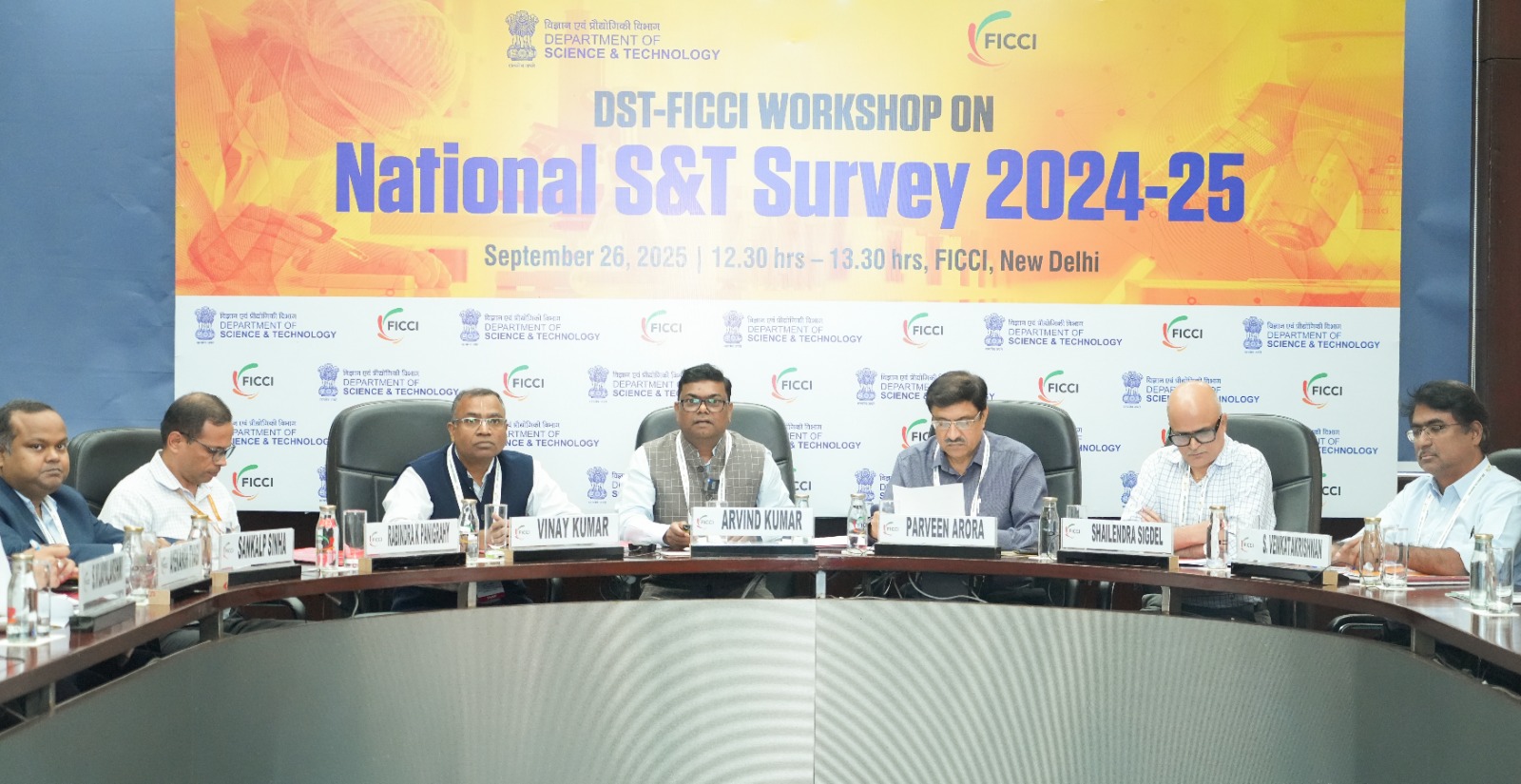
Experts emphasise reliable data sharing from industries as key to shaping evidence-based policies, boosting R&D investments, and advancing India’s science, technology, and innovation ecosystem
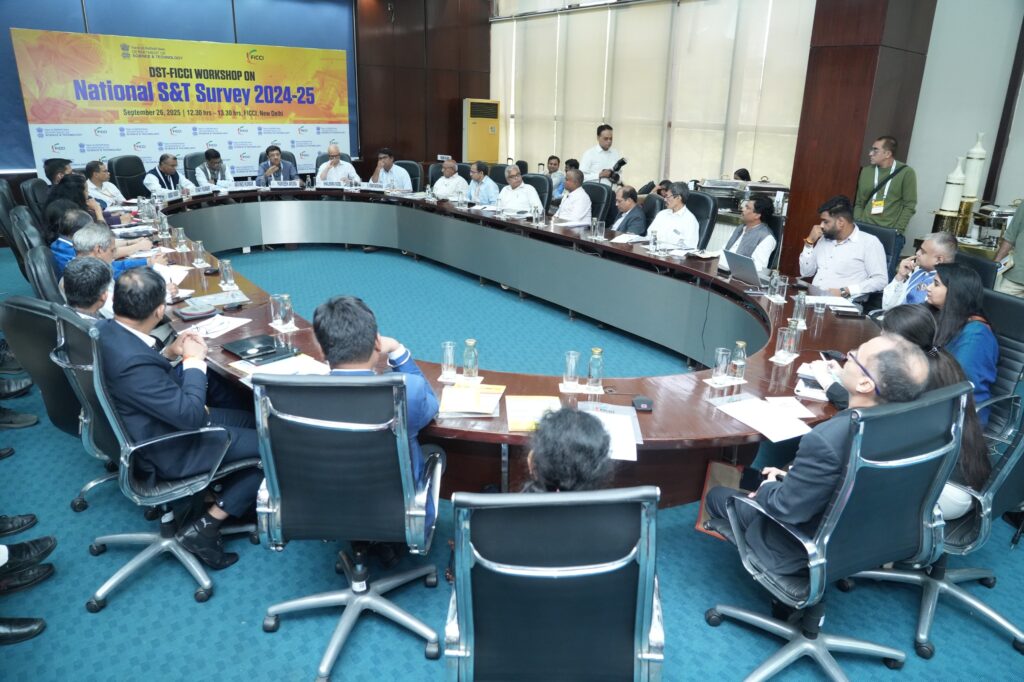
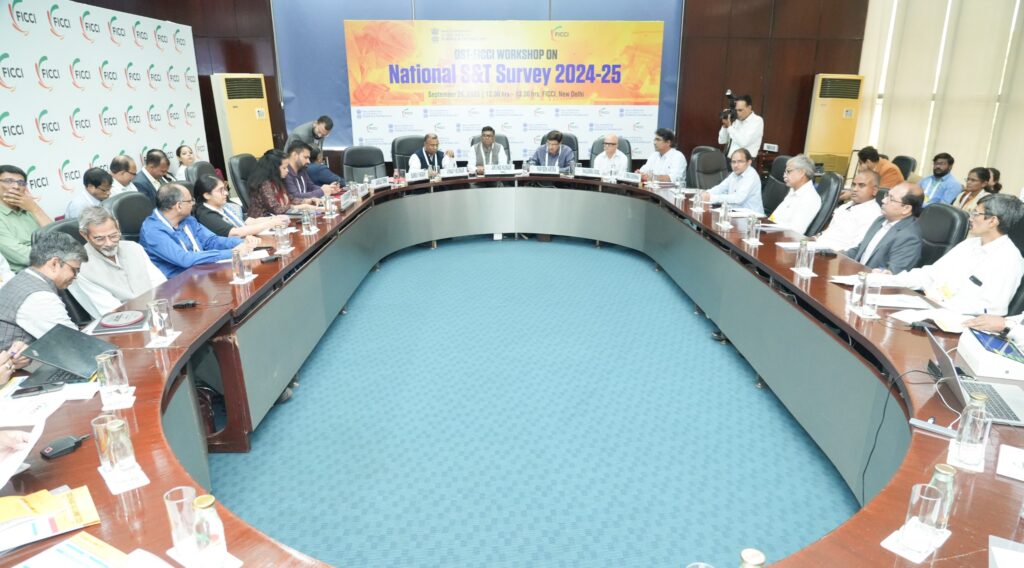
The Department of Science & Technology (DST), Government of India, in collaboration with FICCI, organised a high-level workshop in the capital to deliberate on the National Survey on Resources Devoted to Scientific & Technological (S&T) Activities 2024-25. The event underscored the critical role of the private sector in supporting India’s science, technology, and innovation ecosystem through stronger participation and reliable data sharing
Senior officials, industry leaders, researchers, and representatives from international agencies agreed that comprehensive and high-quality data forms the backbone of evidence-based policy decisions.
Need for stronger industry participation
Dr. Arvind Kumar, Advisor and Head of NSTMIS (DST), called on industries to proactively share data, stressing that higher response rates and accuracy were essential for the success of the survey. He noted that while corporates in advanced economies contribute nearly 70–75% of total R&D spending, India’s share stands at only 36.5%. India currently invests about 0.64% of GDP in R&D, though GERD has more than doubled in the past decade—from ₹60,196 crore in FY2010-11 to ₹1.27 lakh crore in FY2020-21.
Dr. Kumar also highlighted government initiatives to encourage private innovation, including the proposed ₹1 lakh crore Research, Development & Innovation (RDI) Fund to provide long-term concessional financing to corporates and startups working in areas such as AI, robotics, quantum computing, renewable energy, and digital agriculture.
Perspectives from government and experts
Shri Vinay Kumar, Head of the Industrial R&D Promotion Programme (DSIR), observed that although India has over three lakh registered firms, only 40,000 are covered in national databases. He urged industry to consider data submission a national responsibility.
UNESCO’s Regional Statistical Advisor, Shailendra Sigdel, flagged challenges in data collection across developing countries and emphasised aligning with international standards like the Frascati Manual. Former NSTMIS head Dr. Praveen Arora called for simplification of survey instruments to improve participation.
Industry voicesFrom the corporate sector, IBM India’s Shri Sankalp Sinha stressed the need for transparent definitions and wider dissemination of results to build industry trust. Forus Health’s CTO, Shri S. Venkatakrishnan, highlighted the importance of long-term investments in high-impact sectors and recommended designing incentives to make data sharing a collaborative responsibility rather than a burden.
Mankind Pharma’s Mr. Ayekansh Tyagi proposed practical measures such as linking data submission to grant eligibility, engaging student interns for data collection, and regular progress reviews. Citing China’s aggressive fiscal strategies, he urged India to strengthen its competitive edge in global R&D.
The way forward
The workshop concluded with consensus that enhancing private sector participation and ensuring data quality in the National S&T Survey will be crucial for evidence-based policymaking, accelerating innovation, and fulfilling India’s long-term development goals.
About the Survey
The National S&T Survey, conducted by NSTMIS (DST), collects data from around 8,000 organisations across sectors including public and private enterprises, higher education institutions, NGOs, and multinationals. The 2024-25 survey is being carried out on a web-based platform with unique login IDs for each organisation to ensure security, efficiency, and authenticity of data.


 admin
admin