These Days Bureau
Indian Railways strengthens passenger safety with indigenously developed Automatic Train Protection System
30 July 2025, Mathura/Kota
In a major advancement towards enhancing railway safety, Indian Railways has successfully commissioned the indigenously developed Kavach 4.0 on the Mathura-Kota section of the Delhi-Mumbai high-density corridor. This move marks a significant step in the modernization of India’s rail safety infrastructure.
Railway Minister Shri Ashwini Vaishnaw praised the achievement, noting that Kavach 4.0 is a result of the ‘Atmanirbhar Bharat’ vision led by Prime Minister Narendra Modi. “While developed nations took decades to build similar systems, India has achieved this milestone in a short span. Kavach 4.0 is a highly advanced and technology-intensive safety system,” he stated.
About Kavach 4.0
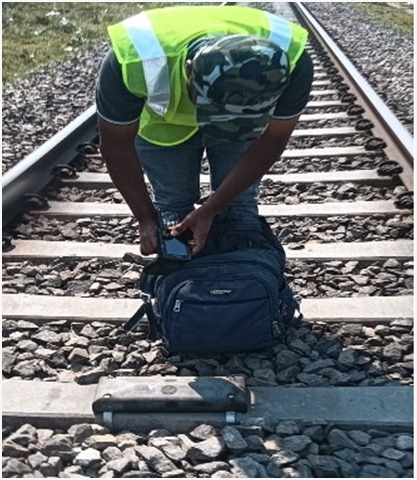
- Kavach is an Automatic Train Protection (ATP) system developed entirely in India.
- It is designed to prevent collisions and overspeeding by automatically applying brakes in emergency situations.
- The system ensures continuous communication between trains and station control, even in low-visibility conditions such as fog, enabling loco pilots to receive signal information directly inside the cabin.
- Kavach meets the Safety Integrity Level 4 (SIL-4) — the highest globally recognized safety standard.
- Development began in 2015, followed by three years of rigorous testing. It was first deployed in South Central Railway in 2018, and based on its success, the upgraded Kavach 4.0 was approved in May 2025 for trains operating up to 160 kmph.
Technological Features of Kavach
Kavach is a highly complex system and is comparable in scale to setting up a full-scale telecom network. Its key components include:
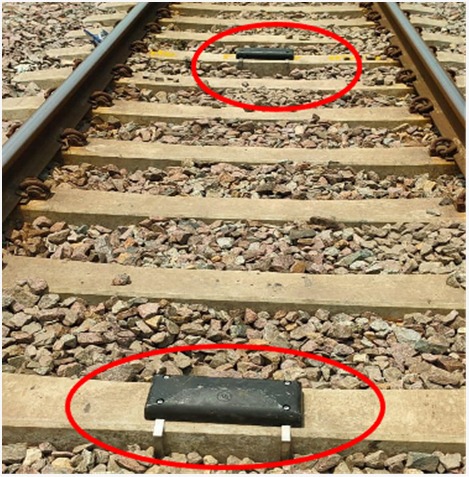
- RFID Tags installed every 1 km along railway tracks and at every signal to track train positions precisely.
- Telecom Towers built at regular intervals, equipped with optical fiber connectivity and power supply, enabling seamless communication between stations and locomotives.
- Loco Kavach, fitted in locomotives, interacts with RFID tags and braking systems to ensure automatic speed control and emergency braking.
- Station Kavach, installed at stations and block sections, coordinates with Loco Kavach to maintain safe train speeds and positioning.
- Optical Fibre Cables (OFC) laid along the track provide high-speed communication across all system components.
- Integrated Signaling System, working in tandem with Kavach units, ensures signal and movement coordination for improved operational safety.
These systems are deployed without disrupting regular train operations — even on busy routes with heavy passenger and freight movement.
Current Progress of Kavach Implementation
As of July 2025, Indian Railways has made significant progress in the installation of Kavach systems across the network:
- Over 5,856 km of optical fibre cable has been laid.
- 619 telecom towers have been installed.
- 708 stations have been equipped with Kavach.
- 1,107 locomotives are now running with Kavach onboard.
- Trackside Kavach equipment has been deployed across 4,001 route kilometers.
Future Expansion and Skill Development
To accelerate deployment and adoption, over 30,000 railway personnel have already been trained in Kavach systems. Additionally, IRISET (Indian Railway Institute of Signal Engineering and Telecommunications) has signed MoUs with 17 AICTE-approved engineering institutions to incorporate Kavach training into their BTech curriculum.
Indian Railways aims to install Kavach 4.0 across all major railway routes within the next six years, as part of its larger commitment to safety. The Railways continues to invest more than ₹1 lakh crore annually on safety-related activities, with Kavach being a key initiative under this drive.
With the successful commissioning of Kavach 4.0 on the Mathura-Kota section, India is set to emerge as a global leader in rail safety innovation — combining indigenous technology, speed of execution, and scalable infrastructure for safer train journeys.