admin
admin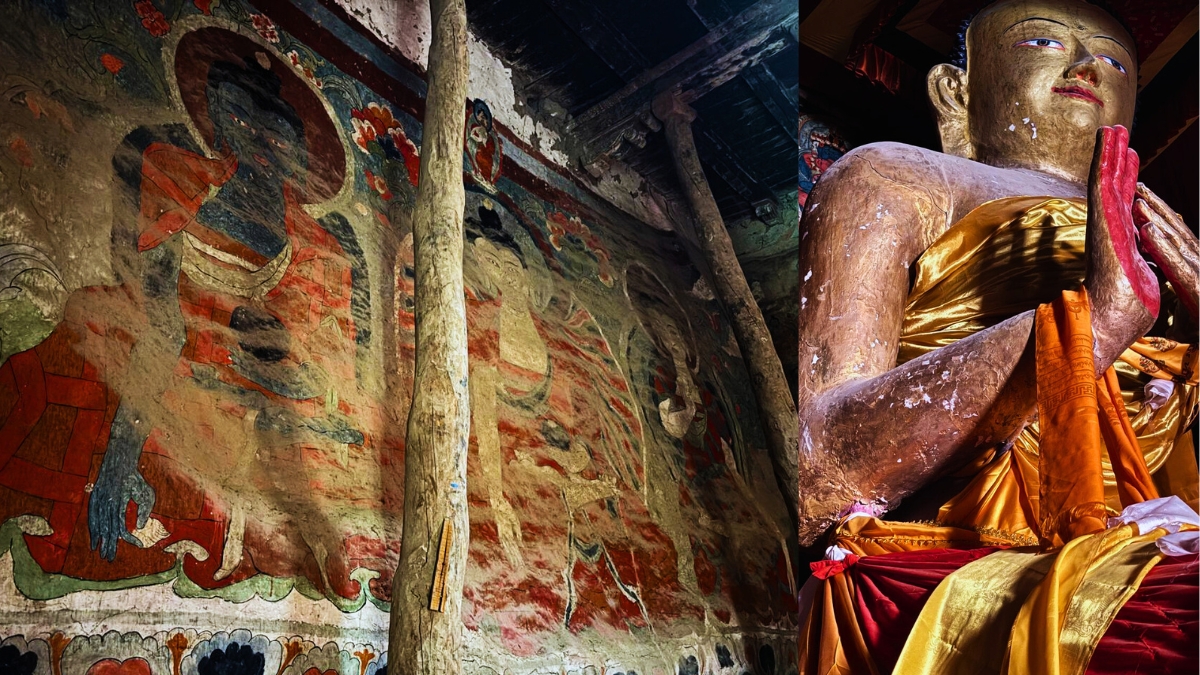
National Academy at Nagarjunakonda to Train Experts and Support Communities
New Delhi: India has taken a decisive step to preserve its vulnerable rural Buddhist heritage by announcing the Delhi Declaration and a dedicated National Academy at Nagarjunakonda.
Organised by the Indian Trust for Rural Heritage and Development (ITRHD) and supported by national and international institutions, the three-day conference brought together scholars, monks, conservation experts and policymakers from across Asia, Europe and the United States to address the urgent need to protect hundreds of little-known rural Buddhist sites. The Andhra Pradesh Government has allotted five acres of land for the proposed academy, envisioned as India’s first institution dedicated specifically to training, documentation and community-centred conservation of rural Buddhist heritage.
The inaugural sessions featured ITRHD Chairman S. K. Misra, who urged coordinated efforts to document and preserve rural sites, and Padma Vibhushan Dr. Karan Singh, who reminded participants that “India will always be the land of the Buddha” and stressed the importance of community ownership of local heritage.
Dharamacharya Shantum Seth highlighted the role of rural artisans and traditions, calling the revival of Buddhist heritage “sangha work” requiring collective participation, while representatives of the International Buddhist Confederation emphasised the need to protect not only monuments but also the people and ecosystems around them.
In the first technical session on the first day of the conference, His Eminence Kyabje Serkong Tsenshap Rinpoche, Spiritual Throne Holder of Tabo Monastery in the Spiti Valley, highlighted the unique challenges faced in conserving Buddhist heritage sites in rural India.
He presented the case of the world-famous Tabo Monastery, which was built in 996 AD and is known for its exquisite murals and frescos depicting the various stages of the life of Gautam Buddha, suffering extensive damage due to excessive rains, resulting from climate change. Located at an altitude of 10,760 feet in the heart of the Himalaya in a traditionally arid region has been buffeted by cloudburst and intense spells of rains, which has caused extensive structural damage to the more than 1000-year-old building made of compressed clay, wood and stones. The percolation of excessive moisture has caused extensive blistering of the murals and discolouration and the statue of Amitabha, the principal deity of the monastery, too has been damaged. The Tabo Monastery is the oldest living monastery in the world, where monks have studied and practised Buddhism for more than a thousand years.
The biggest challenge is that the Tabo Monastery being an Archaeological Survey of India-protected monument, its management cannot undertake restoration activities due to the restrictions imposed by the Ancient Monuments and Archaeological Sites and Remains (AMASR) Act, 1958.
He said, “Tabo Monastery is not only a Buddhist site; it is a national and global heritage treasure. Climate change is now threatening its very survival, and without timely, sensitive intervention, centuries of living history, art, and spiritual practice could be lost. Preserving such sites requires urgent collective action, beyond individuals and institutions.”
On the second day, Former NITI Aayog CEO Dr. Amitabh Kant said the conservation of Buddhist heritage must be treated as a national mission and urged the creation of reflective, community-benefiting Buddhist tourism models.
Heritage experts including Professor Amareswar Galla and Dr. Prajapati Trivedi from the Harvard University called for stronger documentation, academic training and international best-practice exchanges, noting that India cannot protect what it has not yet fully understood.
The conference concluded with the adoption of the Delhi Declaration, an eight-point commitment recognising rural Buddhist heritage as living culture and calling for strengthened community participation, technology-enabled documentation, regional cooperation through a proposed Asian Consortium, and institutional support for the establishment of the Nagarjunakonda academy. International delegates praised India’s leadership, describing the conference as a potential global model for integrated heritage preservation.
With land allotted and a shared roadmap in place, the Delhi gathering marks a significant step toward coordinated national action on rural Buddhist heritage. The proposed academy is expected to anchor long-term research, training and community development efforts, linking conservation with sustainable rural livelihoods and strengthening India’s role in shaping the future of Buddhist heritage across Asia.


 These Days Bureau